
Parliamentary Affairs Minister Kiren Rijiju met Leader of Opposition Rahul Gandhi to discuss resolving the persistent deadlock in the Lok Sabha's monsoon session, focusing on the Delimitation Bill and FCRA Bill, though no immediate commitment was secured from the Congress leader.

Prime Minister Narendra Modi has appealed to opposition parties to support the delimitation-linked Women's Reservation Bill, highlighting its 40-year struggle. The bill aims to provide 33 per cent reservation for women in legislatures and increase Lok Sabha seats, requiring a two-thirds majority for passage. Despite previous setbacks and ongoing efforts to secure numbers, the government continues to push for this crucial legislation.

The Monsoon Session of Parliament for 2026 is scheduled from July 20 to August 13, with significant political developments expected following recent assembly poll results and internal party rebellions. The session will see the ruling NDA's strengthened position in the Rajya Sabha and potential redrafting of a key Constitution amendment bill.

The Monsoon session of Parliament is expected to begin on July 20 and last for three weeks. Key political developments, including recent election victories and party rebellions, are set to influence the session, alongside the government's redrafting of a significant Constitution amendment bill concerning women's reservation and Lok Sabha seats.

Prime Minister Narendra Modi on Friday expressed concern over the repeated disruptions of parliamentary proceedings, stating that due to the turmoil in the House, the country has been unable to listen to the talented MPs elected in recent times.

Students intensified their protest over alleged irregularities in recruitment examinations in Jharkhand with five demonstrators joining an indefinite hunger strike, even as Chief Minister Hemant Soren on Wednesday said the question paper leak issues are a national problem and offered talks to resolve the impasse.
The bill was passed by both houses of the state legislature during the winter session in Belagavi that concluded on December 19 last year, despite strong opposition from the Bharatiya Janata Party and the Janata Dal-Secular.

The Lok Sabha introduced four significant bills on Monday, including amendments to mines and minerals regulations, the establishment of a National Tribunals Commission, and the renaming of Kerala to Keralam, all while facing continuous protests from opposition members demanding a discussion on the July 20 police crackdown on students.

The West Bengal State Legislative Assembly has been dissolved by Governor R N Ravi, marking the end of its term after the recent elections where the Trinamool Congress was defeated by the BJP.

Parliamentary Affairs Minister Kiren Rijiju indicated that the government may bring a bill to increase seats in the Lok Sabha, potentially to implement reservation for women in the legislature. The Opposition has raised concerns about the timing and implications of the proposed bills.

Karnataka Governor Thaawarchand Gehlot has refused to address the joint sitting of the state legislature, prompting government intervention. The reasons are unclear, but follow similar incidents in other states.

Opposition NDA legislators in Jharkhand have been moved to a hotel ahead of the Rajya Sabha elections for two seats. The BJP-backed independent candidate, Parimal Nathwani, faces a challenge as the NDA lacks the required numbers, necessitating potential cross-voting for victory.

The BJP and the Opposition have engaged in a war of words over the implementation of the women's reservation bill, which aims to reserve seats for women in legislatures. The bill was defeated in the Lower House, leading to accusations and counter-accusations between the parties.

The TMC is facing a crisis following its defeat in the West Bengal assembly polls and a rebellion that has significantly weakened its organisational and legislative strength.

Recent BJP organisational moves and Rajya Sabha nominations have sparked speculation that Prime Minister Narendra Modi may soon undertake a ministerial reshuffle.

A Constitution Amendment Bill aimed at implementing 33 per cent reservation for women in legislatures and increasing Lok Sabha seats was defeated in Parliament, marking a setback for the government's efforts to empower women in politics.

What is missing in the BJP's armour is dominance over 50 percent of the electorate: Women. And this is a gamble Modi-Shah have indicated that they are willing to take, explains Saisuresh Sivaswamy.

The Bihar government has rejected demands to review its prohibition law, which has been in place for a decade, despite concerns raised by members of the ruling NDA about financial losses to the state.

The Congress party in Haryana boycotted a special session of the state assembly, accusing the ruling BJP of using the platform for political propaganda related to a defeated Constitution amendment bill on women's reservation. The BJP criticised the Congress's move as anti-women.

Both Houses of Parliament were adjourned sine die, concluding a Budget session marked by the passage of key legislations and the defeat of a Constitution amendment bill on women's reservation. The session saw frequent opposition protests and discussions on various issues, including the West Asia conflict.

The BJP-led government in Bihar secured a vote of confidence in the state assembly, with Chief Minister Samrat Choudhary pledging economic development and significant investments. The motion was passed amidst heated debates and accusations between the ruling NDA and the opposition, highlighting political tensions and differing views on issues like women's reservation.

The Karnataka cabinet has approved eight draft bills, including those addressing hate speech, cattle slaughter, and social boycott, to be tabled in the upcoming legislative session.

Gehlot had on Wednesday refused to deliver the address to the Karnataka legislature, leading to a stalemate over the fate of the customary speech that outlines the government's policies.
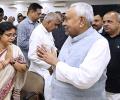
JD-U lawmakers voiced their concerns over Nitish Kumar's move to the Rajya Sabha, while also welcoming the imminent political debut of his son, Nishant, amidst speculation about the future leadership of the state.
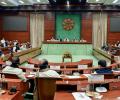
Opposition parties in India are demanding a discussion on the Special Intensive Revision (SIR) of electoral rolls and national security in the upcoming Winter Session of Parliament. They raised concerns about federalism, national security, and the purity of voter lists during an all-party meeting.

The bill, named 'Shakti' and modelled on the Disha Act in Andhra Pradesh, also provides for completion of investigation and filing of chargesheet within 15 days, and completion of trial in 30 days.

The state cabinet approved the Parliamentary Affairs Department's proposal to convene the first session of the 17th assembly and 196th session of the legislative council from November 23 to November 27, minister Amarendra Pratap Singh of the BJP said.
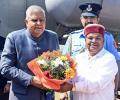
Karnataka Governor Thaawarchand Gehlot has reserved the Bill pertaining to four percent reservation for Muslims in government contracts for the President's assent, citing constitutional concerns. The Bill, which has been a subject of controversy in Karnataka, was passed by both houses of the state legislature amid protests from the opposition BJP. The Governor's decision to reserve the Bill highlights the ongoing debate over the constitutionality of religious-based reservations in India.
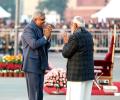
The BJP had no option but to get Jagdeep Dhankhar out of its way for the sake of the Modi government's stability, reveals Sheela Bhatt, the legendary political journalist.
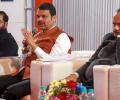
Shiv Sena's Dadaji Bhuse is the new school education minister while Uday Samant continues to be the industries minister.
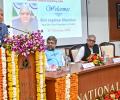
Vice President Jagdeep Dhankhar has questioned the Chief Justice of India's involvement in executive appointments, specifically citing the selection of the CBI director. He believes this practice undermines democratic principles and calls for revisiting the existing norms. Dhankhar also raised concerns about the "doctrine of basic structure", suggesting it has a debatable jurisprudential basis. He emphasized the importance of each institution operating within its constitutional boundaries and highlighted the need for coordinated autonomy. The vice president also discussed the need for a balanced approach to judicial review and the importance of judges focusing on judgments rather than other forms of expression. He stressed the need to revisit the current state of affairs to restore the judiciary's sublimity.
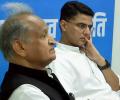
Gehlot's remark hinted at a possible thaw between the two senior Congress leaders after years of political tussle.
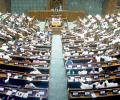
Parliament's approval of the Waqf (Amendment) Bill, a contentious piece of legislation aimed at reforming Waqf bodies, has sparked strong reactions from the opposition, who allege that the bill was "bulldozed" through Parliament. The bill, considered the government's most consequential legislation in its third term, was passed with comfortable majorities in both the Lok Sabha and Rajya Sabha despite opposition claims of a lack of consultation and an intrusion into religious affairs. Other notable bills approved during the session included the Finance Bill, Appropriation Bill, Immigration and Foreigners Bill, and Tribhuvan Sahkari University Bill. The session, which saw high productivity, also witnessed debates on issues such as economic distress, delimitation, and the three-language policy. While the government touted its achievements, the opposition criticized the government's approach and vowed to challenge the Waqf bill in court.

The Uttar Pradesh assembly on Tuesday passed the UP Prohibition of Unlawful Conversion of Religion (Amendment) Bill, 2024 that provides for a maximum punishment of life imprisonment, making the law stricter in cases of fraudulent or forced conversion.
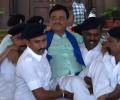
Eighteen BJP MLAs were suspended for six months from the Karnataka Legislative Assembly for disrupting the budget session and disrespecting the Speaker. The incident occurred on the last day of the budget session, when the opposition BJP MLAs staged a massive protest over the allocation of a four percent reservation to Muslims in public contracts. The MLAs climbed onto the podium where the Speaker's chair is situated and threw papers at him.
The Congress on Saturday named 22 more candidates for the Rajasthan assembly polls and denied ticket to Public Health Engineering Department Minister Mahesh Joshi from his Hawa Mahal constituency in Jaipur.
Manjhi has called planned JD-U legislature party meet an unauthorised one.
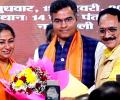
Rekha Gupta had the support of the RSS, which actively participated in the Delhi assembly poll campaign to help the BJP win.

The 61 year-old leader was the Minister for Home Affairs, Law, Parliamentary Affairs and Legislature in Yediyurappa's council of ministers that was dissolved on Monday and was also the Minister in-charge of Haveri and Udupi Districts.
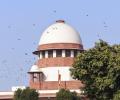
The Indian government defended the Waqf (Amendment) Act, 2025 in the Supreme Court, arguing that waqf, while an Islamic concept, is not an essential part of Islam. Solicitor General Tushar Mehta stated that waqf is essentially charity, which is recognized across religions, and cannot be considered a fundamental tenet of any faith. He also argued that the amended law addresses secular aspects of waqf and activities unrelated to Islam, and that "waqf by user" does not grant ownership of public land. Mehta highlighted the extensive consultations involved in the bill's creation, including feedback from various stakeholders. The hearing will continue on Thursday.
